Saada ratkaisu
Kuinka asentaa 500 kg/h LFP -akun kierrätyslaitos Singaporessa

Kuinka asentaa 500 kg/h LFP -akun kierrätyslaitos Singaporessa

Tehokkaan litiumakkujen kierrätyksen kasvavan kysynnän ja kasvavan kestävän kehityksen vuoksi LFP-akkujätteen käsittely, monet yritykset investoivat mekaanisiin kierrätyslinjoihin. Esimerkiksi, 15. kesäkuuta 2025, Singaporelainen asiakas tiedusteli 500 kg/h LFP-akkujen kierrätyslaitoksen perustamisesta mekaanisilla kierrätysmenetelmillä. Tämä asiakas ilmoitti, "...täydellinen linja - käytettyjen LFP-akkujen vastaanottamisesta arvokkaiden materiaalien käsittelyyn ja talteenottoon mekaanisen kierrätyksen avulla. Ole hyvä ja lähetä minulle laitoksen layout ja tarjous kapasiteetilla 500 kg tunnissa...”Seuraavat tiedot viestinnästämme tässä tapauksessa:

Mitkä ovat LFP-akkujen kierrätyslaitoksen peruslaitteet?

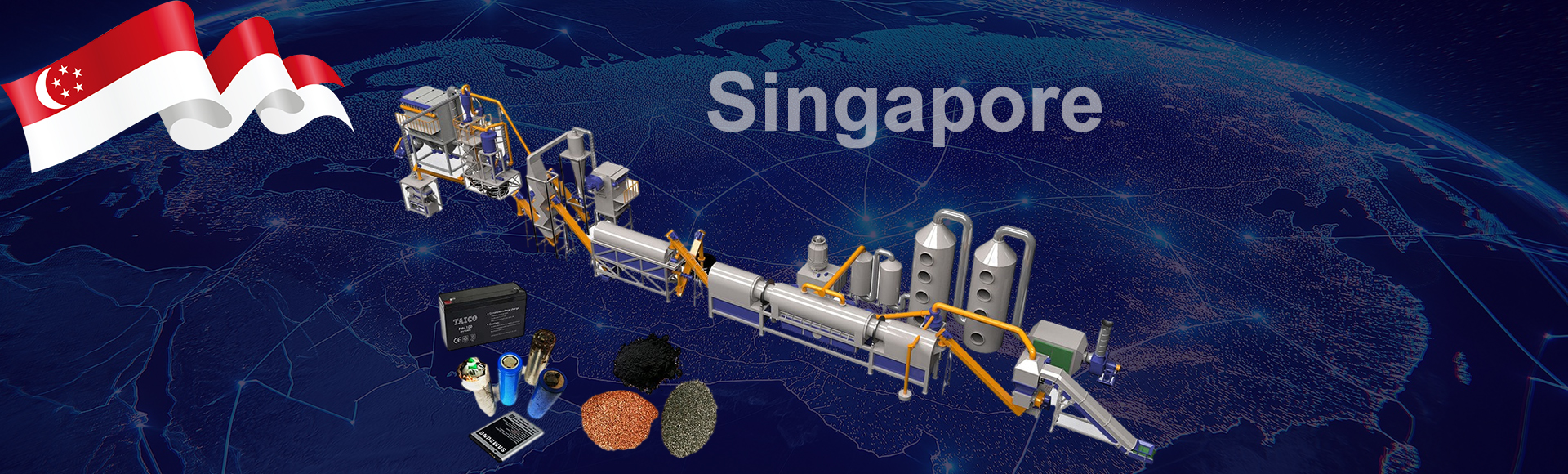
This Singaporean client wanted a complete LFP battery recycling production line—from battery collection to material separation and storage—with a capacity of 500 kilograms per hour using mechanical recycling. During the detailed communication, the client asked about the essential equipment needed. The mechanical recycling plant is generally divided into four main parts:

  • Crushing and Drying

    The recycling process begins with a double shafts shredder and two hammer mills, reducing battery pieces from 2–4 cm down to 3 mm. The crushed material then enters a low-temperature dryer at about 120°C, which removes residual electrolyte. Emissions are purified through a dust removal system including a spray tower, activated carbon adsorption, and UV photocatalytic oxidation.

  • Screening and Dust Collection

    After drying, materials pass through rotary and vibrating screeners to separate black powder, kupari, alumiini, and battery separators. Magnetic and gravity separators further refine metals for collection. Throughout the plant, dust and fine particles are captured via a centralized pipeline into a pulse dust collector and exhaust purification system, ensuring environmental compliance.

What is the Design of a 500KG/H LFP Battery Recycling Line?

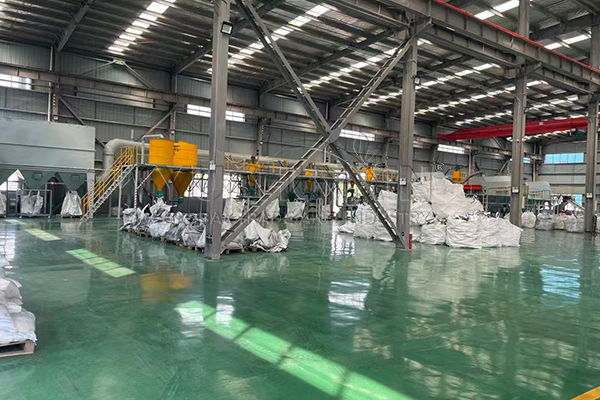
When you want to setup a LFP battery recycling plant, factory area are also two aspects you must consider. Yleensä,the whole LFP battery disposal area is divided into three parts: The discharge area is where the batteries are safely discharged to reduce residual charge. This area requires secure containment and safety measures. Sitten, the crushing and screening area is where most of the mechanical processing occurs, including shredding, seulonta, magnetic separation, ja kuivaus. Niin, this area typically occupies the largest area, designed for efficient material flow and equipment placement. Lopulta, the recovered materials storage area is designated for storing separated copper, alumiini, black powder, and other recovered components before further processing or shipment. For a 500kg/h capacity plant, each area is planned carefully to optimize operational safety and workflow efficiency.

500kgph LFP battery recycling plant

How Much Does it Cost to Setup a LFP Battery Disposal Line in Singapore?

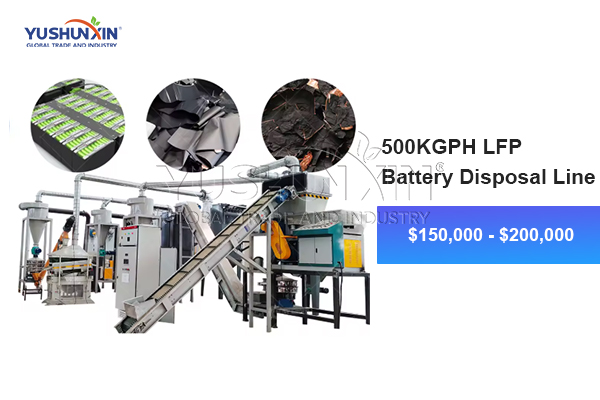
The client also asked about the total investment required for a mechanical recycling line with a 500kg/h capacity in Singapore. Because the equipment used in quality recycling lines involves shredders, hammer mills, screeners, separators, dryers, ja dust control systems, the estimated price typically ranges from USD $150,000 kohtaan $200,000. Kuitenkin, costs can vary depending on configuration and supplier. For businesses seeking to reduce costs, some equipment options can be substituted or customized, but it is important to balance cost with operational efficiency and environmental compliance.

cost of 500kgph LFP battery recycling line

What are the Typical Power Consumption Needed in 500KG/H LFP Battery Disposal?

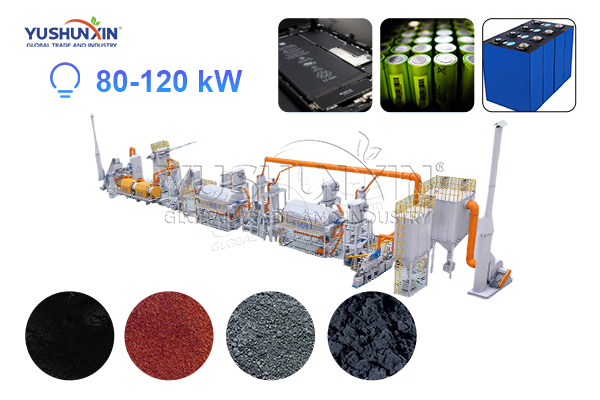
Lopulta, this client from Singapore wanted to know the power consumption in 500 kg/h LFP battery disposal. For an LFP battery recycling line with a capacity of 500 kg/h, the typical power consumption ranges between 80 kohtaan 120 kW. The main energy consumers include the double-shaft shredder, hammer mills, rotary and vibrating screeners, matalan lämpötilan kuivausrumpu, and dust collection system. The drying and crushing sections require the most power due to mechanical forces and heating. Efficient equipment and proper operation can help minimize energy use while maintaining stable processing capacity and high material recovery rates.

power consumption of LFP battery recycling machine

The above are details about our communication with the customer from the Singapore. Lisäksi, besides LFP battery disposal line, we also can provide you with many other lithium battery disposal plans. Kuten esim EV-akun kierrätyslinja, mobile phone lithium battery disposal plan, 1000kg/h lithium battery recycling system, jne.

Pyydä ilmainen tarjous

Ilmaiset palvelut sinulle

Hanki ilmaiset tarjoukset ja tuotetiedot, ja nauti yksilöllisistä palveluista.

Tyhjä lomake (#6)

Jätä viestisi

Tyhjä lomake (#6)

Tämän sivun sisältöä ei voi kopioida